
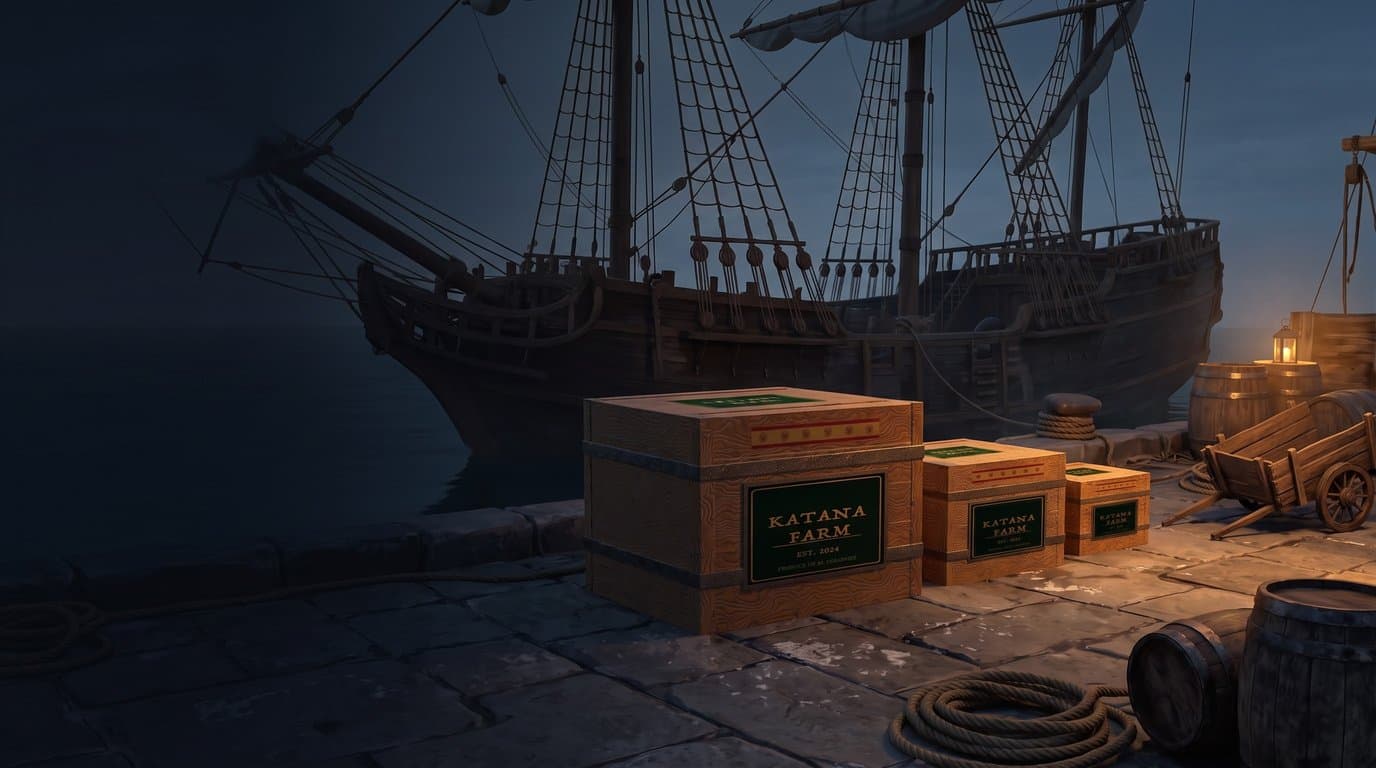
From the field to the Trading Post
Farm it. Make it. Sell it.
Everything here starts as something you grew, gathered or hunted. Turn it into food, drink and tools, seal it in a crate, and sell it to other players for Linden dollars.
Free to start
The HUD and meter are free. Make an avatar, put them on, and you can be gathering in minutes.
Your goods, your price
You choose what goes in a crate and what to ask for it. We take no commission on a sale.
Nothing hidden
A sealed crate publishes exactly what is inside, so a buyer can look before they bid.
Step one
It starts with the land
Every crate on the Trading Post began in a field, a forest or a hunt. What you cannot grow or find yourself, you can buy for coins at the markets.
Farm
Plant wheat, barley, potatoes, corn, cabbage and more in your own fields and bring in the harvest. Grapes grow in vineyards for the wine-makers.
The Farmer →Gather
Fell timber, dig ore and stone, pick herbs and flowers. Smelt the ore into ingredients a smith can use and saw the logs into planks.
The Woodsman →Hunt
Track game in the wilds, then butcher it for meat and hides. The hides go to the leather rack; the meat goes to the kitchen.
The Ranger →Seeds and anything you are short of are on the market board, priced in coins you earn by playing.
Step two
Then make something of it
Raw goods are worth more once somebody has worked them. Every profession has its own stations and recipes, and they lean on each other.
- The kitchen
Bread, stews, pies, preserves and dried fruit, from the official recipes and the thousands players have invented.
- The forge
Tools, blades and fittings from the ore you dug and smelted.
- The workshop
Furniture and fittings from your own planks, and the crates everything ships in.
- The needle
Leather and cloth made into clothing and gear.
- The herb garden
Remedies and potions from what you gathered.
The long way round
From the field to the barrel
Some goods take more than one pair of hands. The brewery is the clearest example: what the farmer grows, the brewer turns into something worth waiting for.
1
The mash tun
Grain, potatoes or fruit from the fields are mashed with water and warmth until the sugars come out.
2
The fermenter
Yeast goes in, and in its own time the mash becomes ale, mead or wine.
3
The still
If you want something stronger. A wash run through the still comes out as spirit.
4
The cellar
If you can wait. Time in the barrel changes what you made, and what it is worth.
5
Bottle or barrel
Finished, and ready for a table, a tavern or a crate.
Wheat and barley for ale, honey for mead, potatoes for vodka, grapes from the vineyards for wine. The Brewer learns the rest.
Step three
Pack it, and seal it
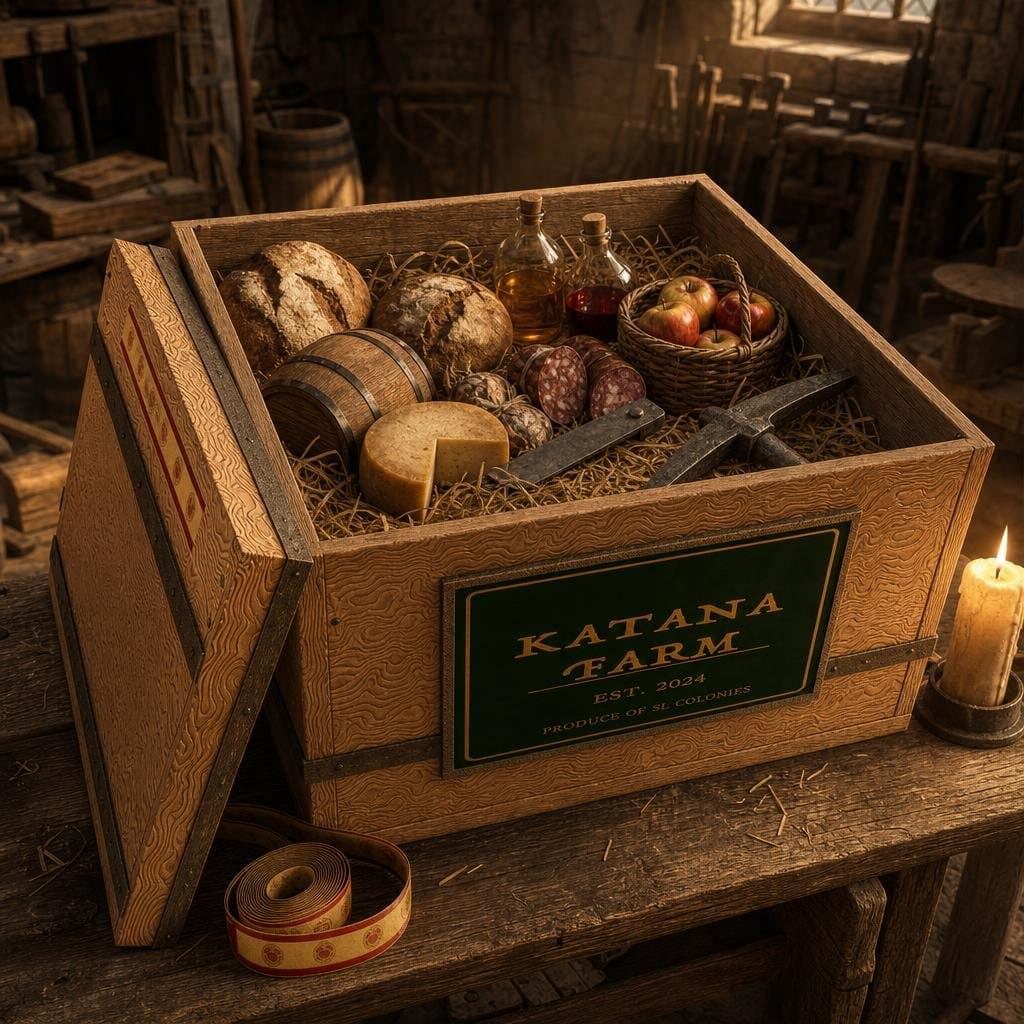
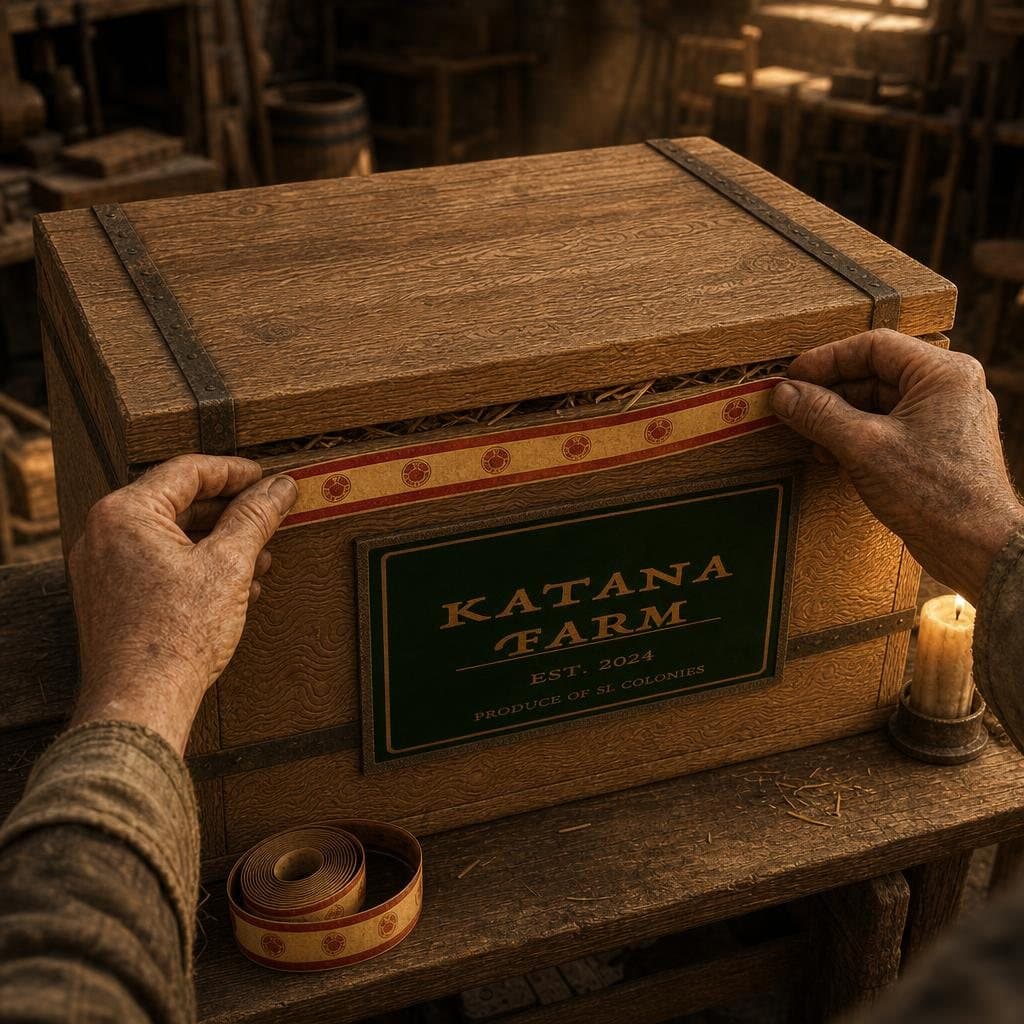
A carpenter makes the crate. You fill it on this website from your backpack and your storage, then seal it.
The seal is what makes a crate worth buying. Once it is on, the contents cannot change, your farm’s brand is stamped across the lid, and the crate publishes exactly what is inside it.
Step four
Sell it for Linden dollars
Put the sealed crate on the Trading Post, at a fixed price or as an auction of one to fourteen days. Buyers pay in Second Life, and the Linden dollars go to you.
Fixed price or auction
The first buyer to pay takes a fixed-price crate. At auction, bidders name their most and pay only what it takes to beat the next one.
No commission
The sale is between you and the buyer. We hold the money until the goods change hands and take nothing from it.
Or sell it in-world
Have a real crate delivered instead, to sell from your own vendor, on the Second Life Marketplace or by hand.
Every step, from crafting the crate to the bot’s payment message, is on the Trading Post.
Your first harvest
Start with a field
Make a Second Life avatar, get the free HUD and meter, register through it, and plant something.